
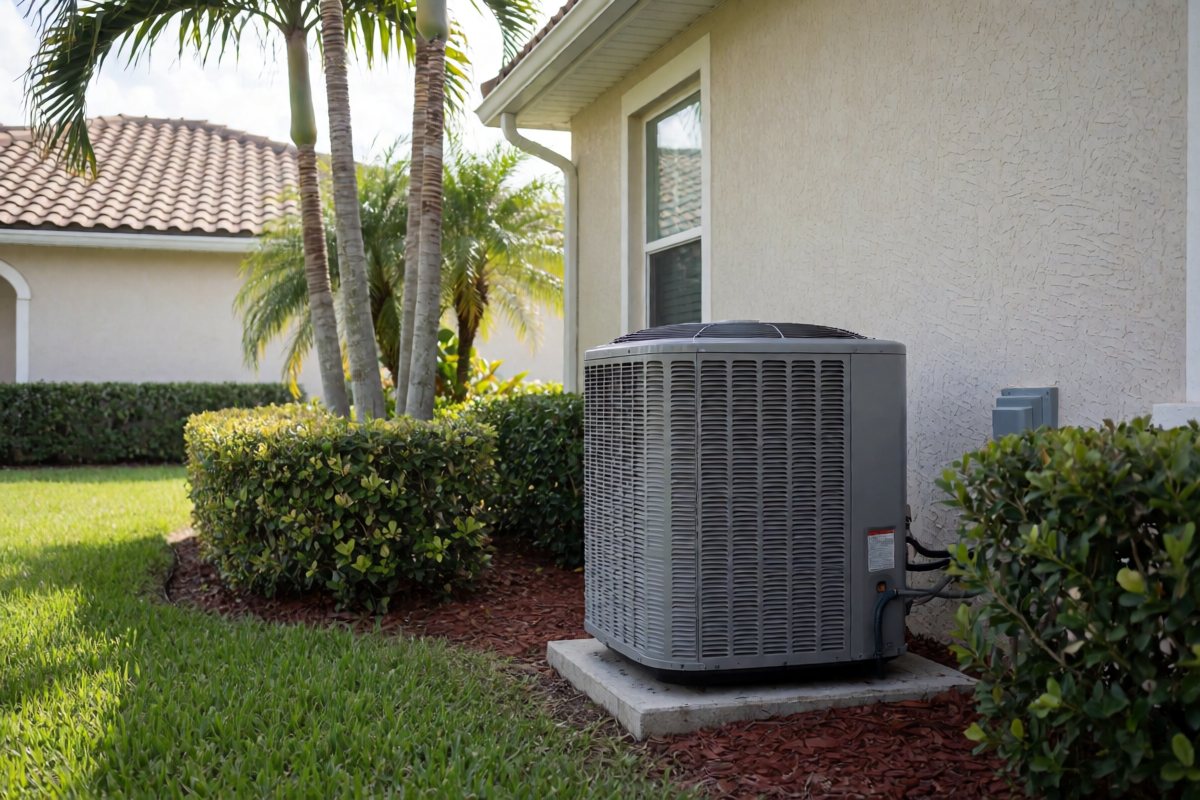
This winter prep checklist is for Tampa Bay homeowners who want to keep their HVAC system running smoothly through the cooler months, whether you're doing the work yourself or verifying that your service company did it right. Tampa winters are mild, so most homes lean on the air conditioner more than the heater, but the transition still matters: a system that's clean, unobstructed, and balanced cools your home more efficiently before the humid summer months hit. Below you'll find tasks broken down by how often they belong on your calendar, plus storm checks specific to this area and a look at what a professional seasonal inspection covers.
Weekly
- Watch your thermostat readings. Note whether your home reaches the set temperature or struggles on hot afternoons; a system that can't keep up is often the first sign of a growing problem.
- Listen for unusual sounds. Short clicks and fans starting are normal, but grinding, squealing, or banging from the outdoor unit deserves a closer look.
- Check for strange odors. Musty smells point to mold or moisture; burning or melting scents can mean an electrical issue and may need immediate attention.
Monthly
- Inspect the outdoor unit quarterly. At least once a month during the cooling season, walk around the condenser and remove leaves, pine needles, palm fronds, and yard debris that clog the coils.
- Keep clearance around the unit. Trim bushes and ensure nothing stacks against the condenser; leave at least a few inches of space so air can flow freely.
- Verify the drain line stays clear. A clogged condensate drain is common in humid climates and can trigger a shutdown or water damage, so check the access tile periodically.
- Verify the drain line stays clear. A clogged condensate drain is common in humid climates and can trigger a shutdown or water damage, so check the access tile periodically.
Seasonally
- Swap your air filters every 1–3 months. Tampa Bay's dust, pollen, and seasonal storms drive more airborne debris than most places, so check filters monthly and replace when they look dirty; a clogged filter strains the system and raises bills.
- Clean the outdoor coils gently. Turn off power at the breaker, rinse the coils with a hose from the inside out, and straighten any bent fins with a fin comb.
- Straighten bent fins. Bent aluminum fins on the condenser restrict airflow, so use a fin comb to restore them and keep heat exchange efficient.
- Clear vegetation and debris. Mow around the unit, rake away fallen leaves, and make sure the area stays open for airflow.
- Check insulation on refrigerant lines. The foam wrapping on the copper lines should be intact; torn or brittle insulation reduces efficiency and can freeze the system.
- Test your thermostat. Switch it to cooling mode and confirm the AC kicks on; if you have a smart thermostat, verify firmware updates and calibration.
After Every Storm
Tampa Bay gets violent afternoon thunderstorms in summer and gusty fronts in winter, so inspect the system after any major weather event.
- Inspect the outdoor unit for damage. Look for bent fins, loose panels, or refrigerant leaking after a storm; a dropped branch or flying debris can crack the cabinet or coils.
- Check for standing water or a flooded pad. Sandy soil drains quickly, but a low spot or shifted drain line can pool water around the condenser.
- Look for tripped breakers or power loss. If the AC won't start after a storm, check the disconnect box and breaker before calling anyone out in the weather.
- Clear debris and sediment. Storms push leaves, sand, and twigs onto the unit; hose it off and clear the surrounding area before restarting.
Annual Professional Inspection
Even with diligent DIY care, have a licensed HVAC technician perform a full seasonal inspection at least once a year, ideally before peak summer cooling loads.
- What a pro checks. A thorough inspection covers refrigerant charge and superheat, electrical connections and contactors, motor and capacitor health, thermostat calibration, condensate drainage, and overall system performance including airflow and temperature drop.
- What it costs. A standard seasonal HVAC tune-up in the Tampa area typically runs $85–$175, depending on the company and any add-ons like coil cleaning or drain flushing.
- Why it matters. A technician can spot a weakening capacitor or low refrigerant before it strands you with no AC during a 95-degree spike, and many maintenance plans include priority emergency service and discounts on repairs.
Following this checklist keeps your system efficient, catches small problems before they become expensive emergencies, and helps you confirm your service company did the job properly before the next heat wave arrives.