
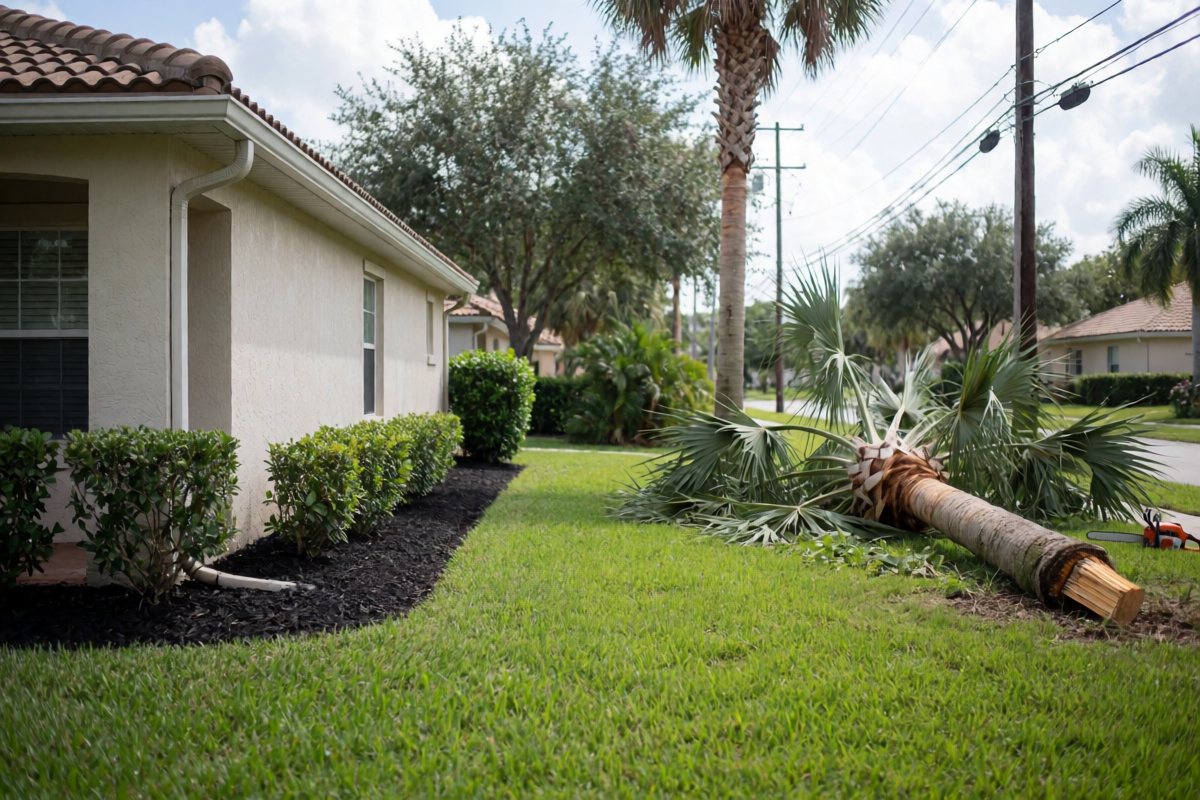
Mowing your lawn or hand-pulling weeds is a Saturday afternoon with a cold drink. Felling a dead palm over your roof or digging into an irrigation line running 240 volts and pressurized water is a phone call to a licensed pro. Most landscaping tasks sit somewhere in between, and the difference between a fun project and a costly mistake usually comes down to one question: what happens if it goes wrong.
Where DIY Genuinely Makes Sense
- Weeding and mulching: Low stakes, no tools that hurt you, and fresh mulch genuinely improves our sandy soil and holds moisture in the heat.
- Mowing and basic lawn upkeep: A push or riding mower costs nothing to own beyond fuel, and your grass will grow back if you miss a spot.
- Hand-pulling invasive plants: Cogon grass, Bermudagrass runners, and turner sunflower are easier out by the roots than to fight with chemicals.
- Planting annuals and perennials: A spade, some compost, and water are all you need, and these plants won't kill your home if you place them slightly wrong.
- Reinforcing sprinkler heads after storms: Snugging a popped head or swapping a broken one is quick work once you confirm the line is off.
- Raking and clearing debris: After an afternoon thunderstorm, pulling branches and leaves off your lawn and driveway is straightforward.
Where DIY Gets Dangerous Fast
- Tree trimming on ladders or near power lines: Florida's heat makes palms and oaks grow fast, and climbing or working near overhead lines causes falls and electrocution, not just a bad haircut.
- Full tree felling: A falling tree can crush your structure, a neighbor's fence, or a person. One misjudged lean turns a $300 job into an insurance claim.
- Digging deeper than a shovel blade without locating utilities: Hitting your irrigation line, gas, or a conduit can cost thousands and shut off services for hours.
- Modifying irrigation wiring or the main panel: Sprinkler controllers run on 120 volts, and a wet connection near a breaker or junction box is a shock or fire hazard.
- Installing hardscape without proper base and drainage: In our heavy rain and sandy soil, a patio or retaining wall built wrong will shift, crack, or push water toward your slab foundation.
- Removing a large stump yourself: Renting a stump grinder and doing it alone leads to thrown rock injuries and hidden damage to your irrigation and utility lines.
The Hidden Cost of Bad DIY
The mower or shovel rarely causes the biggest bills—later repairs do. Here is what a pro often gets paid to clean up:
- A cut irrigation line can cost $300–$800 to locate, repair, and restore, plus water wasted on an uncontrolled leak.
- A crushed palm or tree limb that cracked your tile roof or damaged a window can run into the thousands in structural and water-injury repairs.
- A retaining wall that bulges after the first rainy season costs $1,500–$4,000+ to tear out and rebuild with a proper aggregate base and drainage.
- A burned-out sprinkler controller from a wiring mistake typically costs $150–$400 to replace and reinstall.
- Improperly installed pavers or a sunken path cost $2,000–$6,000 to level, rebase, and relay.
When to Call a Professional
Reach for the phone rather than the mower when any of these are true:
- The tree is taller than you can safely reach from the ground, or it's near power lines, your roof, or a structure.
- You're removing a tree or large stump near utilities, your foundation, or a pool cage.
- The job involves digging deeper than a few inches, or moving/draining water in a way that affects your lot.
- You're building a retaining wall, patio, or walkway that holds back soil or carries weight.
- Anything touches your irrigation wiring, breaker panel, or main water line.
- Your HOA or the city requires a permit, inspection, or tree removal approval.
A Simple Decision Framework
Before you start, ask yourself:
- What can I not undo? If a mistake means replacing a roof, repairing a wall, or calling an insurer, that's a pro job.
- How heavy or high is the work? Anything above shoulder height or heavier than a single person can handle deserves a pro.
- Does it touch utilities, water, or my foundation? Those are never weekend projects.
- Is a permit or HOA approval involved? If yes, a licensed contractor usually handles it correctly and faster.
- What's my real skill and equipment level? Renting a grinder doesn't make you a stump-removal expert. If you're guessing, hire someone who knows. }