
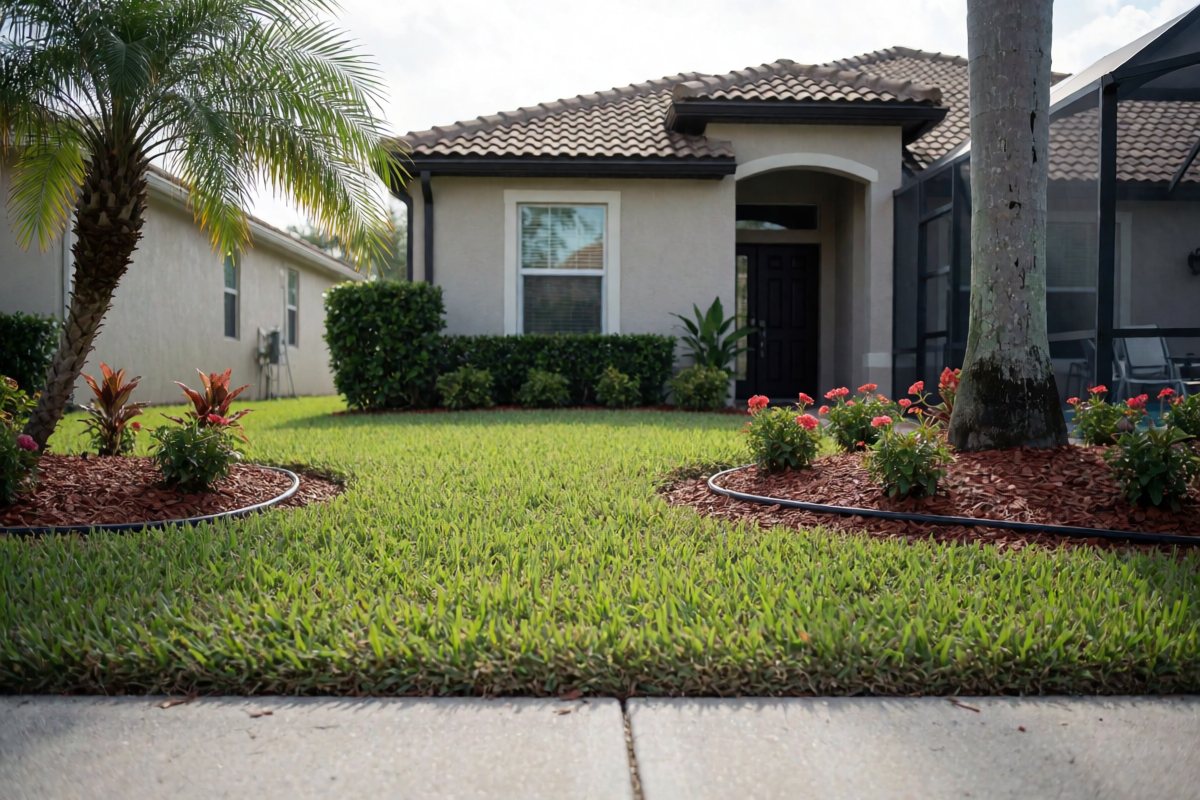
This landscaping checklist works whether you are doing the yard work yourself or just want to verify what your lawn and tree service company should be doing. Tampa Bay's heat, humidity, salty air, and annual hurricane season put unusual stress on lawns, trees, sprinklers, and drainage, so a routine built for other climates will leave you fighting weeds, dead patches, and clogged gutters. The sections below break tasks by how often they belong, with a storm checklist and a guide to the annual professional inspection worth paying for.
Weekly
- Mow the lawn on a consistent schedule, typically every 5–7 days during the growing season, keeping grass blades at the recommended height for your species so you never cut more than one-third at a time.
- Check sprinkler heads while the system runs to spot broken, tilted, or clogged heads that spray onto pavement or leave dry islands in your turf.
- Rake or blow away clippings from driveways, walkways, and the base of plants so cut grass does not smother the grass beneath or feed thatch buildup.
- Walk the yard for new weeds, especially Bermuda and nutsedge, which spread fast in Tampa heat and are far cheaper to pull when small.
Monthly
- Inspect irrigation zones for runoff, puddling, or dry spots, since a misadjusted nozzle wastes water and can drown some plants while leaving neighbors parched.
- Clean gutter screens and downspouts before the rainy season, because fallen palm fronds and storm debris clog quickly and turn into a water-damage problem.
- Trim shrubs and hedges to shape and remove dead wood, cutting back just enough to keep plants from blocking sightlines or crowding the foundation.
- Refresh mulch in beds to a 2–3 inch depth, topping up only where it has settled rather than piling it against plant stems or tree trunks.
Seasonally
- Switch irrigation schedules with the seasons, watering less as temperatures drop and adjusting controllers to match the shift between active growth and dormancy.
- Aerate compacted lawn areas once a year to let roots reach water and nutrients, especially on newer homes built with dense sandy fill.
- Feed the lawn with a Florida-appropriate fertilizer on schedule, matching products and timing to your grass type rather than using a one-size-fits-all bagged feed.
- Prune flowering shrubs right after their bloom cycle finishes, avoiding cuts on plants that set next season's buds on old wood.
- Update drainage where water pools after afternoon storms, adding swales, French drains, or dry wells before a problem worsens.
After Every Storm
- Clear debris from yards, drains, and gutters after high winds, since accumulated palm fronds and branches can block drainage and promote mold.
- Inspect trees and large branches for splits, hanging limbs, or roots exposed by wind, calling a pro before damaged trees become hazards.
- Check sprinkler lines and heads for breaks from windblown debris or shifting soil, since a cracked line can waste gallons and erode beds.
- Look for drainage failures where water should not pool, noting low spots that may need grading corrections before the next storm.
- Assess storm damage to plants, staking leaning shrubs and removing cleanly snapped branches to help the yard recover quickly.
Annual Professional Inspection
A yearly professional walk-through catches problems you will miss on your own mowing and blow-and-go routine, and it is the one service worth budgeting for. A landscaper should inspect lawn health for thinning, disease, and weed pressure, evaluate tree and shrub structure for weak limbs and health, review irrigation and drainage for efficiency and coverage gaps, and flag grading or soil erosion issues that could undermine hardscapes or foundations. Expect to pay roughly $100–$250 for a standard landscaping inspection, with tree-specific evaluations from a certified arborist running higher, often $150–$400+ depending on the number and size of trees. This is separate from routine mowing or seasonal cleanup contracts, and it is a smart addition before hurricane season when trees matter most.