
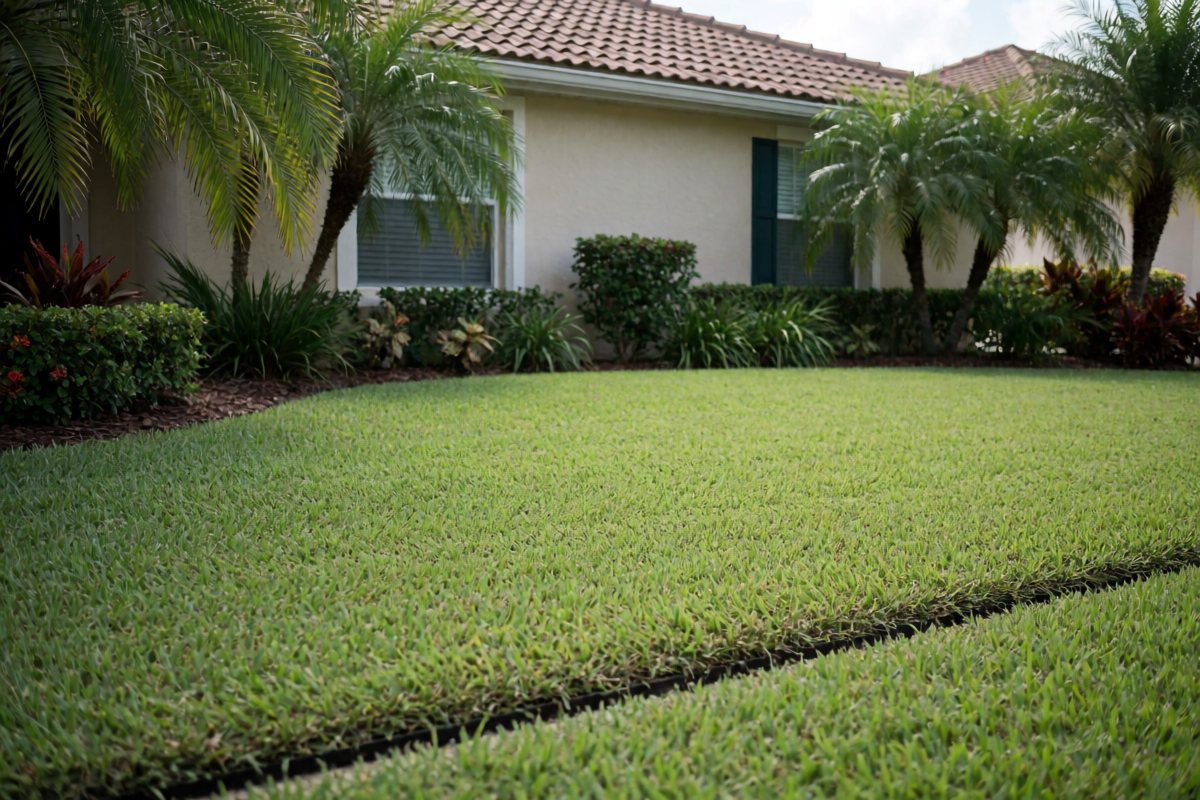
Your lawn is the single biggest visual cue of home upkeep, and in Tampa Bay it is also a real financial asset—an attractive, healthy lawn adds curb appeal that buyers notice the moment they pull up. The problem is that most lawn problems here are not caused by neglect but by doing the ordinary things at the wrong time, so a homeowner can mow weekly and still end up with a thin, weedy, stressed lawn. Getting the basics right—mounding height, feeding schedule, water management, and weed control—matters far more than any single product or service.
How Often Should You Cut the Grass?
The short answer is that Tampa Bay lawns want to be cut frequently during the growing season, usually every 5 to 7 days from spring through fall, and much less—sometimes not at all—during the cooler winter months when grass growth slows. The real rule is the one-third rule: never remove more than one-third of the grass blade in a single mow, because cutting too short stresses the turf, exposes the sandy soil, and invites weeds.
The grass species you plant determines the ideal height:
- Bermudagrass (common in yards with full sun): mow at 1 to 2.5 inches; it thrives on frequent cuts and recovers quickly.
- St. Augustinegrass (the most common Tampa Bay lawn, shade-tolerant): mow at 2.5 to 3.5 inches; the longer blade protects roots from the intense midday sun and helps retain moisture.
- Zoysiagrass: mow at 1 to 2 inches and tolerate a slightly less frequent schedule.
Blunt mower blades tear grass rather than slicing it, leaving ragged tips that brown out and are more prone to disease. Sharpen or replace them regularly, and raise the cutting height in the peak of summer or during a dry spell rather than scalping to keep it looking "fresh."
When and What to Fertilize
Sandy Tampa Bay soil drains quickly and leaches nutrients fast, so feeding happens more often and in smaller doses than in many other regions. The general rhythm is to fertilize during the active growth months—roughly April through September—and to hold off through the cooler, slower part of the year.
Read fertilizer labels by the three numbers, like 16-0-16 or 13-13-13. These represent nitrogen (N), phosphorus (P), and potassium (K). Nitrogen drives the green leafy growth you want, while potassium supports roots and disease resistance. A lawn that looks yellow and slow-growing usually needs more nitrogen; one that is thin and struggling to recover from heat wants more potassium.
- Slow-release nitrogen: feeds steadily over weeks to months, reducing scorch risk and washout—generally the better choice for home lawns.
- Fast-release (water-soluble) nitrogen: gives an instant green-up but can burn grass and leaches quickly through sandy soil.
- Organic/mulch mower options: feed gently and improve soil but act slower and less predictably.
Florida also restricts when you can apply phosphorus-containing fertilizer to prevent water pollution, so check current county rules before choosing a blend. Over-fertilizing is just as harmful as under-fertilizing, burning roots and fueling explosive weed growth.
Managing Water and Irrigation
Tampa Bay's heat, combined with salt air near the coast and sandy soil that drains fast, means your lawn loses water quickly. Most established lawns need about 1 to 1.5 inches of water per week, counting both rain and irrigation. Rather than a long soak once a month, it is far healthier to water lightly and frequently, letting the top few inches stay moist without ever saturating the roots.
Many homeowners install or upgrade a controller-based sprinkler system that adjusts run times based on weather, while others run fixed timers. A smart controller can cut water use meaningfully once it is set up correctly. Watch for the warning signs of a system that is mis-scheduled or leaking:
- Brown, wilting patches that don't recover after watering.
- Puddling or runoff, which means sprinklers are pushing water faster than the soil can absorb it.
- Dry spots that stay dry even when the zone runs.
Because much of the water comes from afternoon thunderstorms, it is easy to double-water on days when the sky already delivered an inch. A simple rain sensor or a weather-based controller removes the guesswork and avoids the wasted water and soggy, disease-prone turf that result from overwatering.
Tackling Weeds Common to the Region
Weeds are not just an eyesight—they outcompete grass for water and nutrients in thin, stressed lawns. The two you will most often see in Tampa Bay are goat's beard (which forms a fuzzy white seed head) and crabgrass (a low, spreading mat). Broadleaf weeds like dandelion and henbit also show up in cooler weather.
The most reliable approach combines a healthy lawn with the right timing:
- Pre-emergent application in early spring and early fall stops weed seeds from germinating before they become a problem.
- Post-emergent spot treatment targets weeds that have already emerged, applied on a calm, dry day so it stays on the leaves.
- Proper mounding and feeding build a dense turf that naturally crowds out invaders, which is the cheapest long-term weed control available.
Broadleaf weeds respond to broadleaf herbicides, while grassy weeds like crabgrass need pre-emergent prevention since you cannot safely treat them without harming your own grass. Applying the wrong product is a common and expensive mistake, so identifying the weed first matters.
Choosing Lawn Care Frequency and Service
If you hire someone, the biggest decision is how often they come. A monthly maintenance plan is the common baseline and typically covers mounding, edging, and blow-off; many homeowners add bi-weekly visits through the summer growing season when the grass demands it faster.
More frequent service costs more per visit but keeps the lawn healthier because it respects the one-thirds rule and catches weeds early. A monthly schedule during peak summer often means each visit cuts more than one-third of the grass, which stresses the turf. Expect a well-maintained Tampa Bay lawn to be serviced roughly 8 to 12 times a year, depending on season and grass type.
What to Look For in a Contractor
Not all lawn care is created equal, and the cheapest quote often means a crew that skips details like emptying the mower bag, cleaning edges, and timing feedings correctly. Ask about licensing and insurance first—Florida requires lawn care operators to hold a Florida Landscape Contractor License (or Landscape Maintenance Certification) for work over a stated dollar threshold, and to carry liability and worker's compensation coverage.
Questions worth asking:
- Do you carry a licensed, insured crew, and can you verify coverage?
- What mounding height will you maintain for my grass type?
- How often do you fertilize, and what blends do you use?
- How do you handle weeds and the seasonal feeding schedule?
Watch for warning signs: a crew that scalps the lawn to make it look green immediately, ignores your sprinkler issues, never cleans up clippings and debris, or refuses to name what products they apply. A good contractor explains the schedule, adjusts for weather, and treats the lawn as a growing system rather than just cutting it whenever they show up.
What to Expect During Regular Service
On a typical visit, expect the crew to mow to the right height, trim or edge the borders along driveways and beds, blow clippings and debris off hardscapes, and clear the catch basket if requested. Fertilizing, aeration, or weed treatment usually happen on a separate, scheduled timeline rather than every visit, so confirm what each visit includes before signing up.
For a larger one-time project like re-seeding a dead patch, aerating compacted soil, or installing a new irrigation zone, expect an on-site walk-through first, a written scope, and a schedule that works around the summer heat and afternoon storms. Good crews avoid heavy work during the worst midday heat and know that a freshly fertilized or seeded lawn needs specific watering instructions to survive Tampa Bay's intense sun.