
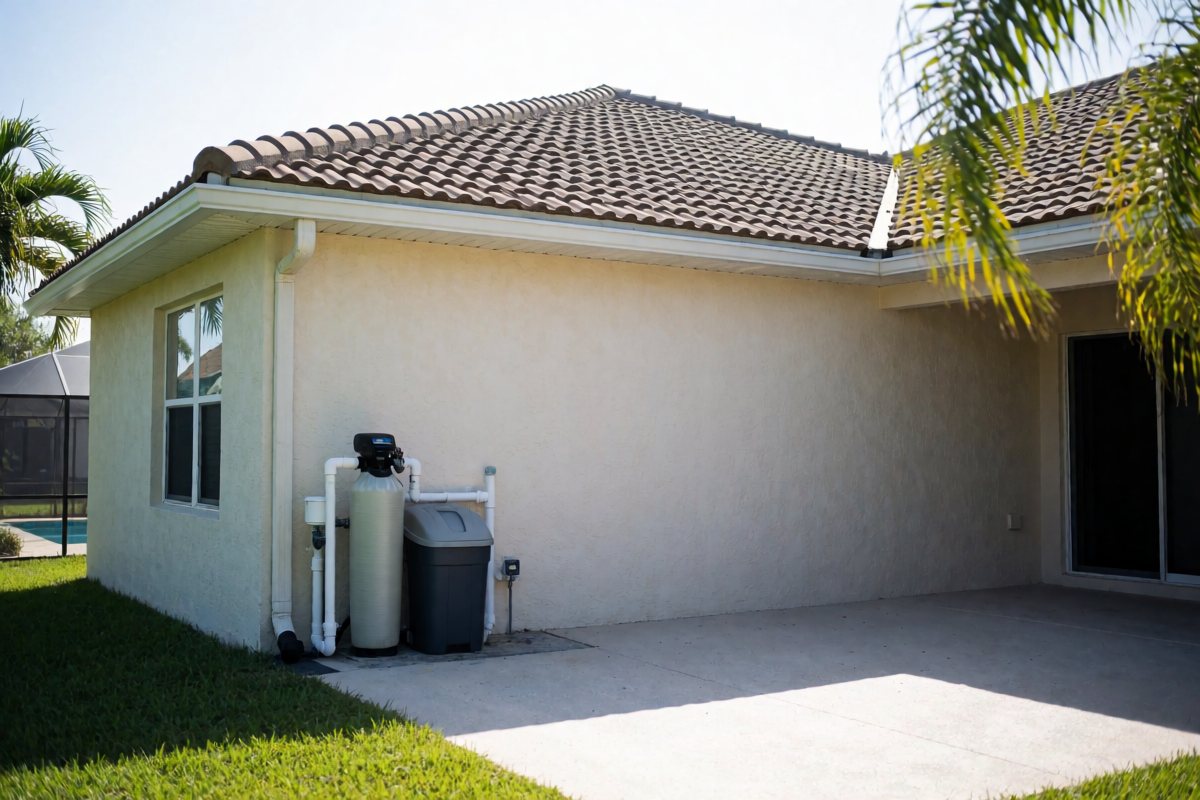
Tampa Bay's water comes from the Florida Aquifer, and while it's generally safer than most municipal supplies, it's also hard—dissolved minerals like calcium and magnesium that build up on fixtures, dry out your skin, and shorten the life of your water-heating appliances. Getting water treatment right means matching the system to what's actually in your water, not buying the biggest tank you can find. Homeowners who skip the water test or oversize the system usually end up wasting money on equipment that does nothing, or discovering that their well water needs far more treatment than a kitchen faucet filter can handle.
What Your Tampa Bay Water Actually Contains
Before you choose anything, you need to know what's in the water. Tampa's tap water is sourced from groundwater and is moderately to quite hard, with hardness often running 150–300+ ppm as calcium carbonate. If you're on a well, the variables widen: iron, manganese, low pH (acidity), hydrogen sulfide (the "rotten egg" smell), and bacteria are all common in Pinellas and Hillsborough wells.
- Hardness: The main Tampa Bay issue. Measured in ppm or grains per gallon. Above 7 ppm is "hard"; above 15 ppm is "very hard."
- Iron: Common in wells, causes reddish-brown staining on fixtures and laundry.
- pH: Low (acidic) water corrodes metal pipes; high water scales pipes.
- Hydrogen sulfide: Gives water a sulfur smell and a metallic taste.
- Total dissolved solids (TDS): A broad measure of everything dissolved.
Get a tap-water test through the city's annual water report (if on Tampa/Muni/Pinellas/Safety Harbor supply) or a lab test for wells. Home test kits are cheap; full-panel lab tests run $50–$150 and tell you exactly what you're treating.
Whole-Home Softeners vs. Point-of-Use Filters
The biggest decision is scope. A whole-home water softener or conditioners treats every tap in the house, while point-of-use systems serve one faucet or a few. What goes wrong is homeowners buying a small under-sink unit when they actually have a hardness problem that affects their shower, dishwasher, and pipes too.
- Whole-home water softener: Exchanges calcium/magnesium ions for sodium (or potassium) via a resin tank. Protects pipes, skin, appliances, and laundry. This is the system most Tampa Bay homes with hard water need.
- Whole-home filtration/conditioner: Removes chlorine, sediment, and some contaminants without removing the beneficial minerals. Good for chlorine taste/odor and protecting appliances.
- Reverse osmosis (RO): A point-of-use system under the kitchen sink that strips nearly everything, including minerals, for drinking water. Best for cooking and drinking water specifically.
- Charcoal (activated carbon) filter: Catches chlorine, VOCs, and taste/odor issues. Found in refrigerator filters, under-sink canisters, and some whole-home units.
If your water is hard, softening is a whole-home job. RO and charcoal filters are drinking-water solutions and won't fix scale on your showerhead.
How Softeners Are Sized
Softener size isn't one-size-fits-all. It's based on your household's daily water use, your water's hardness level, and how often you regenerate the salt. Buy too small and you'll be regenerating constantly and softening poorly; buy too large and you waste salt and space.
Sizing depends on three numbers: grains-per-gallon hardness, daily water use (roughly 70 gallons per person per day is a common figure), and the resin tank's capacity measured in grains.
- Small homes, 1–3 people: A 24,000–31,800-grain softener is typical.
- Average 3–4 person household: 48,000–64,000-grain systems are common.
- Large homes or very hard water: 64,000+ grain or dual-tank systems regenerate more efficiently and use less salt.
A proper install includes a metered valve (regenerates based on demand, not a fixed timer), a drain line to a proper air-gap location, and a salt bin. On very hard Tampa wells, expect regeneration every few days; on municipal water, maybe every few weeks.
Reverse Osmosis and Drinking Water
For drinking water specifically, reverse osmosis is the gold standard in Tampa Bay because it removes the hardness minerals, iron, and any well contaminants that carbon filters miss. But RO has trade-offs worth understanding before you commit.
- Waste water: RO systems send 2–4 gallons down the drain for every gallon produced, so expect a modest bump in your water bill.
- Mineral removal: It strips minerals too, so quality units add a re-mineralization stage back in.
- Tank and filters: RO units have a pressurized tank and multiple filter changes every 1–3 years.
- Taste: The result is clean, flat-tasting water—many people prefer it for coffee, tea, and cooking.
A well-sized RO system under the kitchen sink typically serves a household's drinking and cooking water. If your tap water has iron or sulfur, install sediment and carbon pre-filters before the RO unit or it'll clog quickly.
Costs, Salt, and Maintenance
Costs vary by system, home size, and whether you have a well. Here's what a Tampa Bay homeowner can generally expect to pay.
- Whole-home water softener install: $1,000–$2,500, depending on tank size, valve type, and plumbing modifications.
- Whole-home filtration/conditioner: $700–$1,800 installed.
- Reverse osmosis (under-sink): $300–$700 for a quality unit with installation.
- Charcoal/under-sink filter kits: $100–$300, often a DIY job.
Ongoing costs matter too. A softener uses salt every few weeks to 3 months; a bag of salt costs a few dollars, so annual salt runs $50–$150. Filter changes for RO and carbon systems run $50–$150 a year. Salt pricing and how often your particular water makes the system regenerate affect the real cost, so budget for it.
What to Look For in a Contractor
Water treatment involves plumbing, a drain line, an air gap, and sometimes electrical for certain units. A licensed plumber who does water work regularly will size the system correctly rather than guessing. Verify the contractor holds a valid Florida licensed-plumbing credential and carries liability insurance and workers' comp.
Questions to ask:
- Can you size the softener based on a water test, not just guesses?
- What do you recommend for my specific hardness, iron, or pH levels?
- Where will the drain line and salt bin go, and does it meet code?
- What's the maintenance schedule, and how much will salt and filters cost?
Warning signs to avoid: a salesperson who pushes a system without testing your water, a one-size-fits-all upsell, or a quote with no explanation of why a particular size fits your home. Anyone recommending a whole-home system without knowing your hardness level should not be doing the install.
What to Expect During Install and After
A whole-home softener or filtration system is usually installed in a few hours if it's replacing or adding to existing plumbing near an existing drain. Expect the crew to locate the main water line, cut in the unit, run a drain line to a proper air-gap location (so backflow can't contaminate your supply), and connect the salt bin. You'll get a walkthrough of how to regenerate the system, add salt, and change filters.
After install, the first few days may show some salt "brining" or cloudy water as the tank flushes—normal and harmless. You'll want to keep salt levels topped off and check the salt bin periodically. Systems last 10–15 years with proper maintenance, and the resin typically lasts 15+ years. Plan for annual filter changes on RO and carbon systems, and keep a log of when you last regenerated and salted. A good installer will stand behind the work and help you dial in regeneration settings before they leave.